On BigQuery
AvailableJob-id prefixes, job labels and SQL comment headers classify dbt, Looker, Dataform, Airflow, Connected Sheets, scheduled queries, and the console. Dataset name tokens infer prod / staging / qa / dev.
BigQuery productEvery query finding names who ran it (person or service account), which tool sent it (dbt, Looker, Sheets, Airflow…) and which environment it hit, so each fix reaches the team that owns it.
Job-id prefixes, job labels and SQL comment headers classify dbt, Looker, Dataform, Airflow, Connected Sheets, scheduled queries, and the console. Dataset name tokens infer prod / staging / qa / dev.
BigQuery productComing soon: QUERY_HISTORY user_name, client application, and warehouse labels mapped onto the same attribution dimensions so a Snowflake finding names a team too.
Snowflake productComing soon: query.history executed_by, client, and warehouse id mapped onto the same user / tool / environment dimensions.
Databricks productNo extra vendor APIs. The job record already has the signal.
Top users, workload mix, and environment share on every finding.
The dashboard is a conversation starter, not a mystery score.
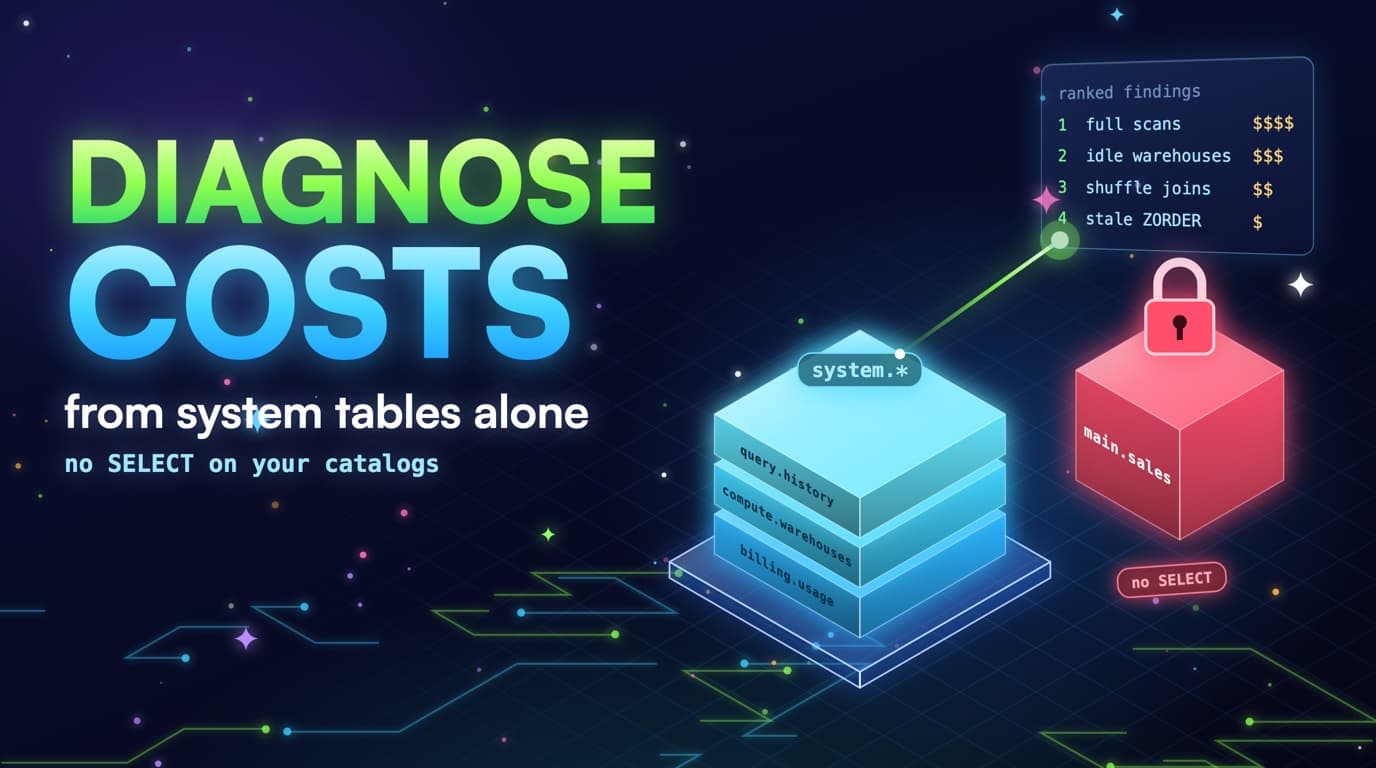
system.query.history and system.compute.warehouses rank full scans, idle warehouses, and shuffle-heavy jobs. SlashPeak never needs SELECT on your tables.
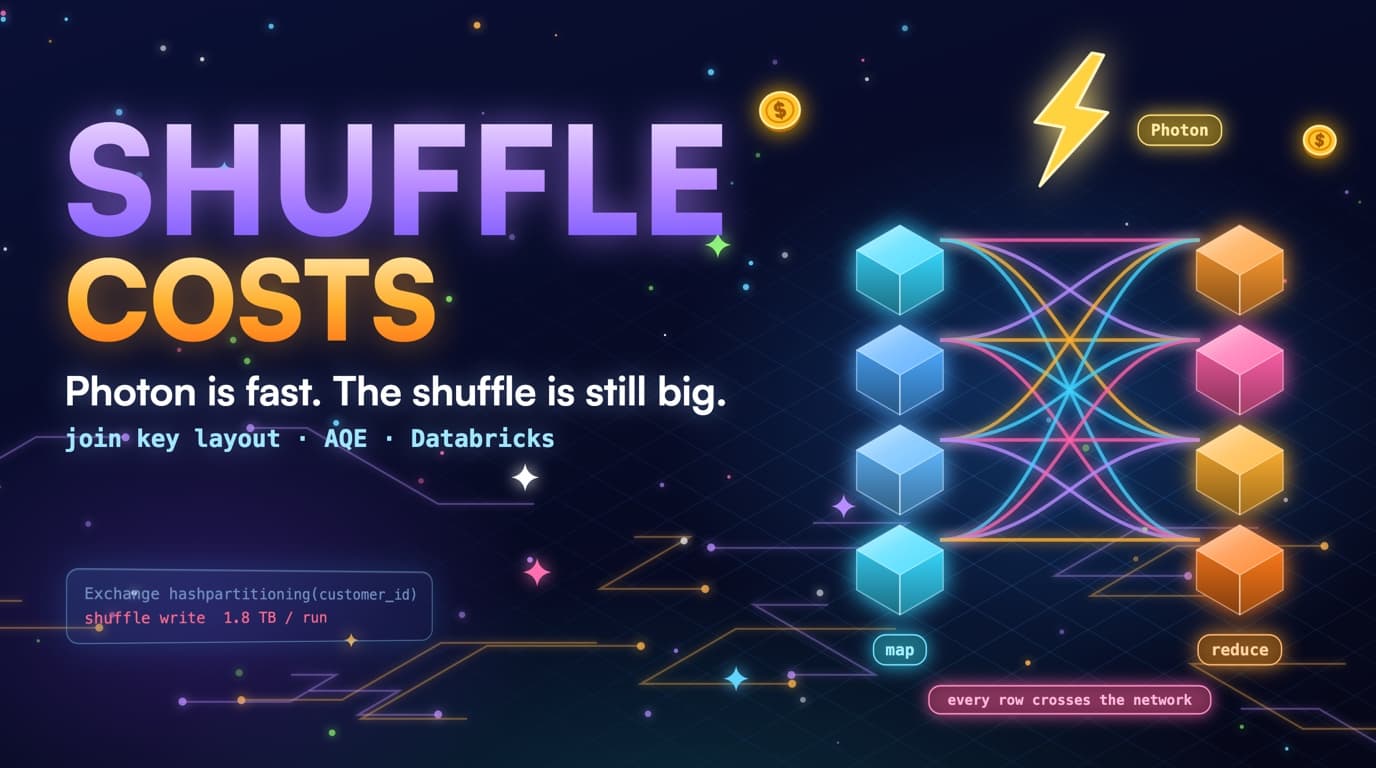
Photon speeds up a shuffle join; it does not shrink it. Adaptive execution helps at the edges, but an unclustered join key still burns DBUs every run.
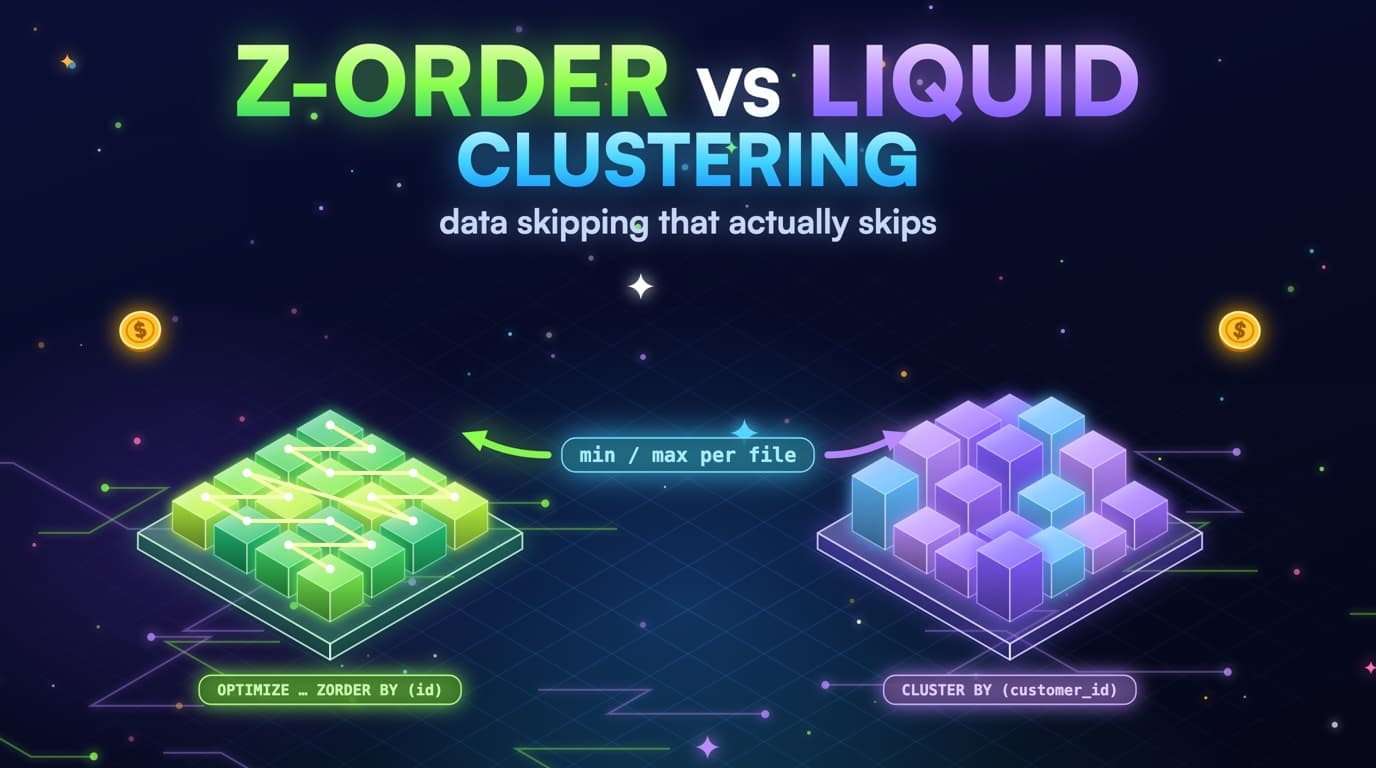
ZORDER and liquid clustering write min/max stats so Photon can skip files. The wrong columns, or a stale table, means it still reads everything.

A serverless warehouse with a 10-minute auto-stop bills 10 minutes after the last query. Oversizing is a separate leak, and system tables show both.
Understand, reduce and govern your cloud data spend with SlashPeak — starting today.